A practice carried by people
Dance is an active part of Assyrian cultural life at celebrations and community performances. The Assyrian Student Association of Arizona's Akitu Dance Crew describes workshops and names several dances, including Khigga Yaqoora, Gubare, Sheikhani and Bablaka.
Variation matters
Dance names, spelling, tempo and steps can vary by region, teacher and performance context. A staged choreography is not necessarily identical to the way a family dances at a wedding. Each recorded example should identify the performers and setting.
Learning and preservation
The best future dance entries will combine a practitioner's explanation with permission-cleared video, a named variation and musical context. Modern practice does not need an unprovable ancient date to be culturally meaningful. This introduction avoids claims that a particular sequence of steps has survived unchanged for millennia.
Co-ordinating a shared sequence
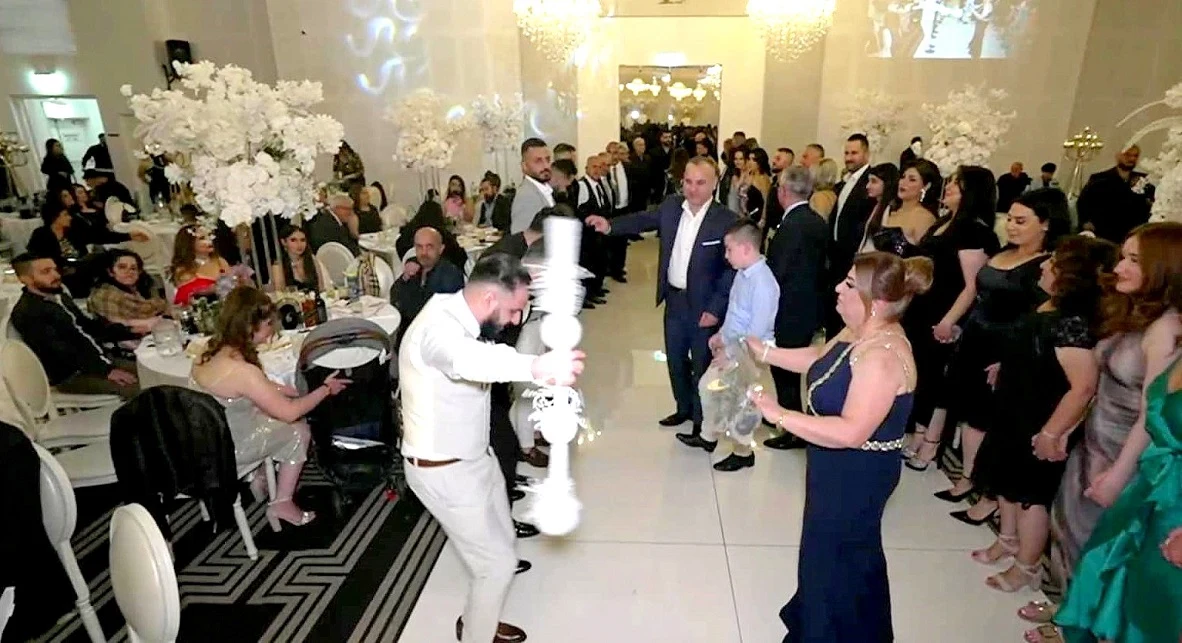
Many Assyrian dances join people in a line or circle. Participants repeat a sequence while co-ordinating timing and movement with the music. A leader can guide direction and expression, while repetition allows a larger group to follow together.
A dance's identity involves tempo, steps, accompaniment and occasion as well as its name. Khigga is widely associated with celebrations, while other named dances have different rhythms and regional connections. Describing movement and setting gives readers more useful information than treating every linked dance as the same performance.
Weddings, learning and variation
A celebration can bring together generations with different levels of language fluency. Experienced dancers guide newcomers by movement and repetition, making participation itself a way of teaching. Formal classes and recordings provide additional routes into the practice.
Diaspora performances may alter scale, accompaniment or presentation on a stage. That variation belongs to a living tradition. Naming the performers and occasion distinguishes a local social practice from a choreographed festival display, without declaring one recording the only authentic version for every community.
This introduction draws on the following sources: [1][2]. Section reading trails highlight selected references where a more precise relationship has been recorded. Unmapped passages and other references remain at article level; these trails are not a sentence-by-sentence verification. Editorial guidance is identified in the text.
Sources & further reading
- 1Community dance practitioners, first-party
Akitu Dance Crew - Assyrian Student Association of Arizona
Assyrian Student Association of Arizona
Public resource; check individual reuse terms. Recorded source check: 2026-10-26. - 2Preserved encyclopaedia reference
Assyrian folk dance
Wikipedia contributors
Full text retained locally under CC BY-SA 4.0. Recorded source check: 2026-10-25. Read retained copy
A foundation to build on
This introduction was compiled from the linked sources and has not received specialist peer review. It is intended as a route into further research. Read how corrections and reviews are handled.
Prepare a correction or contribution