Art within architecture
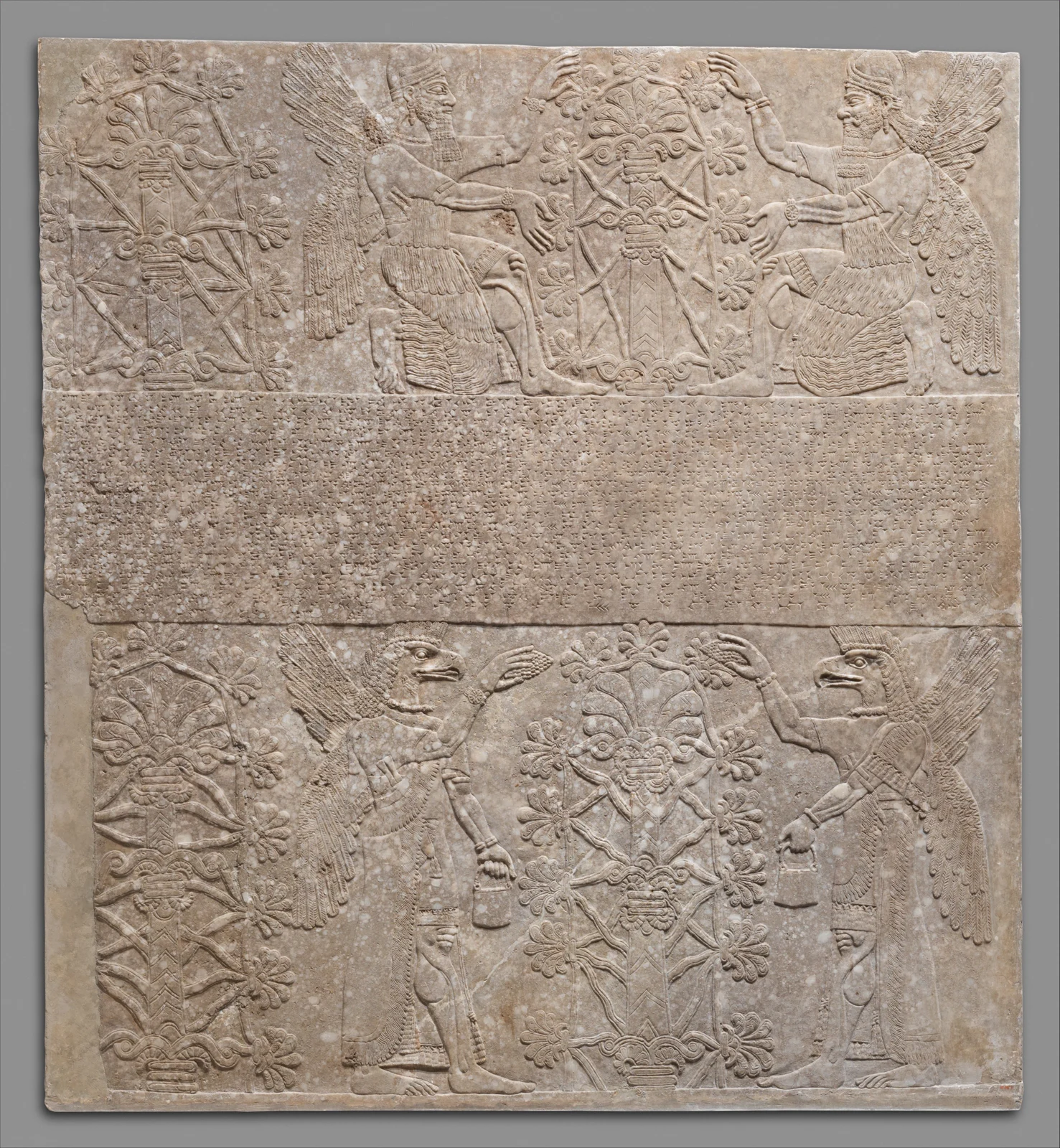
Assyrian stone panels formed parts of palace interiors. Their scale, arrangement and proximity to thresholds affected how they were experienced. Museum installations can help evoke this relationship, while remaining modern interpretations.
Ask who is speaking
Royal imagery is not a neutral photographic record. A ruler commissioned images to represent authority, ritual or military success. Read scenes alongside inscriptions, archaeological context and independent evidence before drawing conclusions about a particular event.
A practical looking guide
Begin with material and object provenance. Note the figure's posture, dress, gestures and repeated motifs. Check which elements a museum identifies confidently and which remain interpretations. Further articles should explore individual works, workshop practices, colour and the histories of excavation and collecting.
Scenes organise events into a narrative
A palace relief can arrange approaches, city walls, siege equipment, surrender, prisoners and royal reception into a sequence. Repeated figures and gestures guide a visitor through the campaign. Equipment and landscape details give the scene more specificity than a general victory announcement.
The composition nevertheless centres royal success. Scale and position communicate hierarchy rather than neutral measurements. Small details of clothing, furniture and military equipment can still provide useful information within that political presentation. Explaining the narrative and its visual choices allows readers to understand both the information and the court's purpose.
An architectural surface rather than a museum picture
Relief slabs originally worked with rooms, doorways, inscriptions and movement through a palace. Their modern appearance as isolated museum objects separates them from that setting. Ancient surfaces could also be painted, so bare stone is only part of their original visual effect.
At Lachish the subject is a named campaign; elsewhere hunting or ritual communicates different royal qualities. Comparing those subjects explains the selection made by a decorative programme. It was never a complete visual survey of ordinary Assyrian life, but its chosen themes reveal how a court wanted kingship to be understood.
This introduction draws on the following sources: [1][2][3][4]. Section reading trails highlight selected references where a more precise relationship has been recorded. Unmapped passages and other references remain at article level; these trails are not a sentence-by-sentence verification. Editorial guidance is identified in the text.
Sources & further reading
- 1Museum scholarship
The Assyrian Sculpture Court
Michael Seymour, The Metropolitan Museum of Art
Public resource; check individual reuse terms. Recorded source check: 2026-10-26. - 2Institutional collection
Assyria, 1365-609 B.C.
The Metropolitan Museum of Art, Department of Ancient Near Eastern Art
Public resource; check individual reuse terms. Recorded source check: 2026-10-26. - 3Museum object record
Relief panel, object 322610
The Metropolitan Museum of Art
Public resource; check individual reuse terms. Recorded source check: 2026-10-26. - 4Preserved encyclopaedia reference
Assyrian sculpture
Wikipedia contributors
Full text retained locally under CC BY-SA 4.0. Recorded source check: 2026-10-26. Read retained copy
A foundation to build on
This introduction was compiled from the linked sources and has not received specialist peer review. It is intended as a route into further research. Read how corrections and reviews are handled.
Prepare a correction or contribution